The Cactus and the Cosmos: The Sacred Role of San Pedro in Chavín Culture
High in the Peruvian Andes, nearly 3,000 years before the rise of the Inca, a mysterious and powerful civilization flourished.
The Chavín culture (c. 900–200 BCE) established one of the most influential religious systems in the ancient world. At the heart of this spiritual empire was a singular, towering green plant: the San Pedro cactus, known indigenously as Huachuma.
For the Chavín, San Pedro was not merely a plant; it was a key that unlocked the gates of the spirit world.
The Shaman’s Tool for Transformation
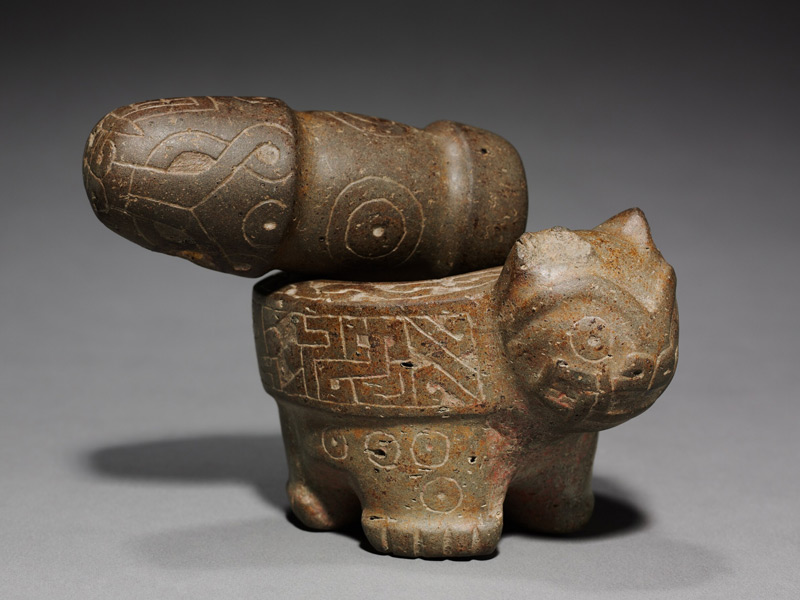
The Chavín people are often described as part of a “cult of the feline.” Their religion centered on the belief that human shamans could transform into powerful predators—specifically jaguars and eagles—to navigate the supernatural realms. The San Pedro cactus, which contains the potent hallucinogen mescaline, was the primary catalyst for this metamorphosis.
Archaeological evidence suggests that the consumption of Trichocereus pachanoi was a carefully orchestrated ritual. Unlike modern recreational use, the Chavín approached the cactus as a sacred medicine capable of granting divination, healing, and direct communication with the gods.
Architecture of the Mind: Chavín de Huántar
The relationship between the Chavín and San Pedro is immortalized in the architecture of their primary ceremonial center, Chavín de Huántar, a UNESCO World Heritage site. This massive stone complex was designed to be a “theater of the mind.”
Ritual participants were likely given a potent brew of the cactus before being led into the “Galerías”—a network of pitch-black, labyrinthine underground tunnels. Within these tunnels, the sensory deprivation of the darkness combined with the psychoactive effects of the mescaline. To heighten the experience, Chavín architects engineered hydraulic channels that caused the roar of rushing water to echo through the tunnels like the growl of a jaguar. This immersive psychological experience was intended to shatter the initiate’s sense of self, facilitating a spiritual rebirth.
Art and the “Cactus Bearer”
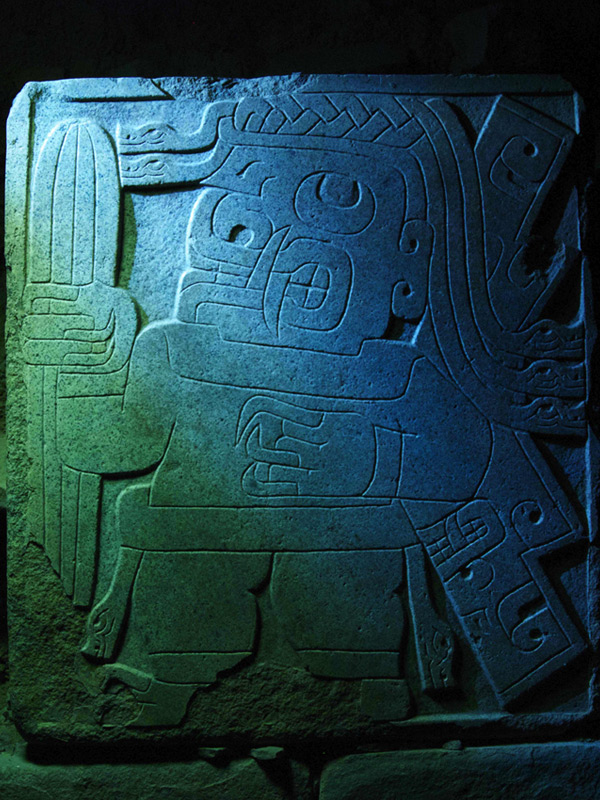
We know of this relationship today because the Chavín were master stonemasons who carved their visions into rock. One of the most iconic images from the Circular Plaza at Chavín de Huántar is a stone bas-relief known as the “Cactus Bearer.” It depicts a winged, fanged supernatural figure clutching a four-ribbed San Pedro cactus like a scepter.
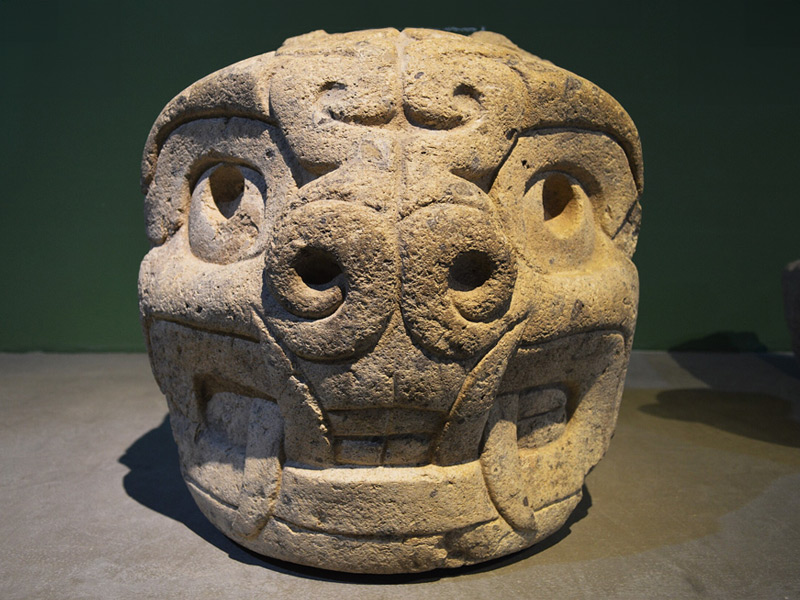
Furthermore, the temple’s exterior was once adorned with Tenon Heads—colossal stone faces protruding from the walls. These carvings depict a terrifying progression: human faces slowly morphing into felines, with dilated pupils and mucus streaming from their noses (a biological side effect of certain psychoactive snuffs often used alongside San Pedro).
A Living Legacy
The Chavín civilization eventually faded, but the “Huachuma” tradition did not. Its use influenced the later Moche and Nazca cultures and survived the Spanish Inquisition by blending with colonial beliefs (hence the name “San Pedro,” referring to Saint Peter, who holds the keys to the gates of Heaven).
Today, traditional healers in Peru continue to use the San Pedro cactus in healing ceremonies, maintaining a spiritual lineage that stretches back three millennia to the cold, mist-covered peaks of the Chavín heartland. Through this ancient cactus, the Chavín left a blueprint for understanding the intersection of botany, architecture, and the human subconscious.