Psilocybin has demonstrated potential in the treatment of a range of mental health and substance-related conditions, including depression, anxiety, bipolar disorder, schizophrenia, autism spectrum disorders, and addiction.
These conditions represent a substantial global health burden, affecting hundreds of millions of people worldwide.
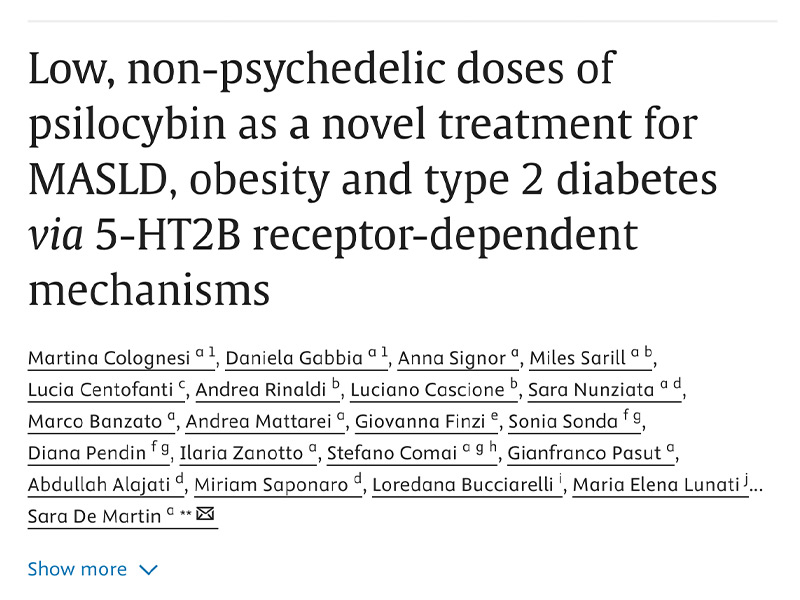
Highlights •Psilocybin ameliorates obesity, insulin resistance, and hepatic steatosis in diet-induced metabolic disease. •Multi-omics analyses reveal normalization of hepatic lipid and carbohydrate metabolism pathways. •Psilocybin improves skeletal muscle strength and restores leptin sensitivity. •Metabolic benefits are mediated by hepatic 5-HT₂B receptor antagonism.
The prevalence of mental health disorders has increased in recent years, particularly in the aftermath of the COVID-19 pandemic, highlighting the limitations of many conventional psychiatric treatments. In this context, psilocybin-assisted therapies have emerged as a promising alternative approach, with the potential to address treatment resistance and improve long-term outcomes.
Beyond its effects on mood and anxiety disorders, psilocybin has also shown analgesic properties, with clinical evidence suggesting benefits in the management of cluster headaches and other forms of persistent pain. Read the full article here…
https://www.sanpedrocactus.co.za/wp-content/uploads/2026/02/Novel-Treatment-for-T2D.jpg800600San Pedro, Mushroom & Ethnobotanical Products in South AfricaSan Pedro, Mushroom & Ethnobotanical Products in South Africahttps://www.sanpedrocactus.co.za/wp-content/uploads/2026/02/Novel-Treatment-for-T2D.jpg